Kitchen cabinets colors can completely change how your kitchen looks, feels, and functions without the cost of a full renovation. This guide helps you choose a cabinet color that matches your style, lighting, countertops, and resale goals. Backed by practical design principles and real homeowner scenarios, it shows which shades feel timeless, which create impact, and which are easiest to maintain. Use it to make a confident choice before you paint, replace, or buy new cabinets.
Choose Cabinet Colors With Confidence
Your cabinets take up more visual space than almost any other feature in the kitchen. That means the right color can make a compact room feel larger, make an older layout feel fresh, and make a new kitchen feel custom. The wrong color can fight with flooring, make countertops look dated, or create a style you tire of quickly.
The best approach is not to pick a trending shade first. Start with the fixed elements in your kitchen: countertops, backsplash, flooring, wall color, appliances, and natural light. Then choose cabinet colors that either harmonize with those elements or create deliberate contrast.
If you are planning a larger upgrade, it can also help to compare color ideas with cabinet styles. Browse practical inspiration for kitchen cabinets before committing to a finish, door profile, or color family.
Why Color Matters More Than Most Homeowners Think
Cabinet color affects both the emotional and practical value of your kitchen. A warm off white can make breakfast feel brighter. A soft green can create a calm, organic atmosphere. A dark navy can make a basic kitchen feel designed and premium. Color also affects how often you clean, how large the room feels, and how buyers perceive your home.
Key benefits of choosing the right color
-
More visual space: Light colors reflect light and can make smaller kitchens feel more open.
-
Stronger design identity: Color helps define whether your kitchen feels modern, classic, coastal, farmhouse, or luxury.
-
Better resale appeal: Timeless cabinet colors often help buyers imagine themselves living in the home.
-
Lower maintenance: Medium tones, wood finishes, and darker neutrals can hide smudges better than bright white.
-
Budget impact: Repainting or refacing cabinets can deliver a major transformation without replacing the entire kitchen.
Timeless Kitchen Cabinets Colors That Work in Real Homes
Some cabinet colors remain popular because they adapt well to many materials and design styles. These are safe choices when you want beauty, flexibility, and long term value.
Warm white and soft off white
Warm white cabinets are bright without feeling sterile. They pair beautifully with marble effect countertops, oak floors, brass hardware, black handles, and natural stone. Choose warm white if your kitchen has limited daylight or if you want a clean look that still feels inviting.
For example, a narrow galley kitchen with beige tile flooring can look wider and softer with warm white shaker cabinets and simple brushed nickel pulls. The result feels fresh but not cold.
Light gray and greige
Gray and greige cabinets are excellent for homeowners who want a neutral palette with more depth than white. Greige works especially well when the kitchen includes warm wood, cream walls, or stone countertops with beige veining. Light gray suits cooler schemes with stainless steel appliances and crisp white walls.
If you like a subtle modern look, explore dedicated ideas for grey kitchen cabinets and compare undertones before choosing paint or new doors.
Soft green
Soft green is one of the strongest choices for a calm, nature inspired kitchen. Sage, muted olive, and gray green cabinets work well with white quartz, butcher block, terracotta accents, and matte black hardware. Green feels current, but the right muted shade can also feel timeless.
Scenario: a family kitchen with wood floors and cream walls may feel warmer and more personal with sage lower cabinets and light upper cabinets. The space gains character without becoming too bold.
Navy blue and deep blue
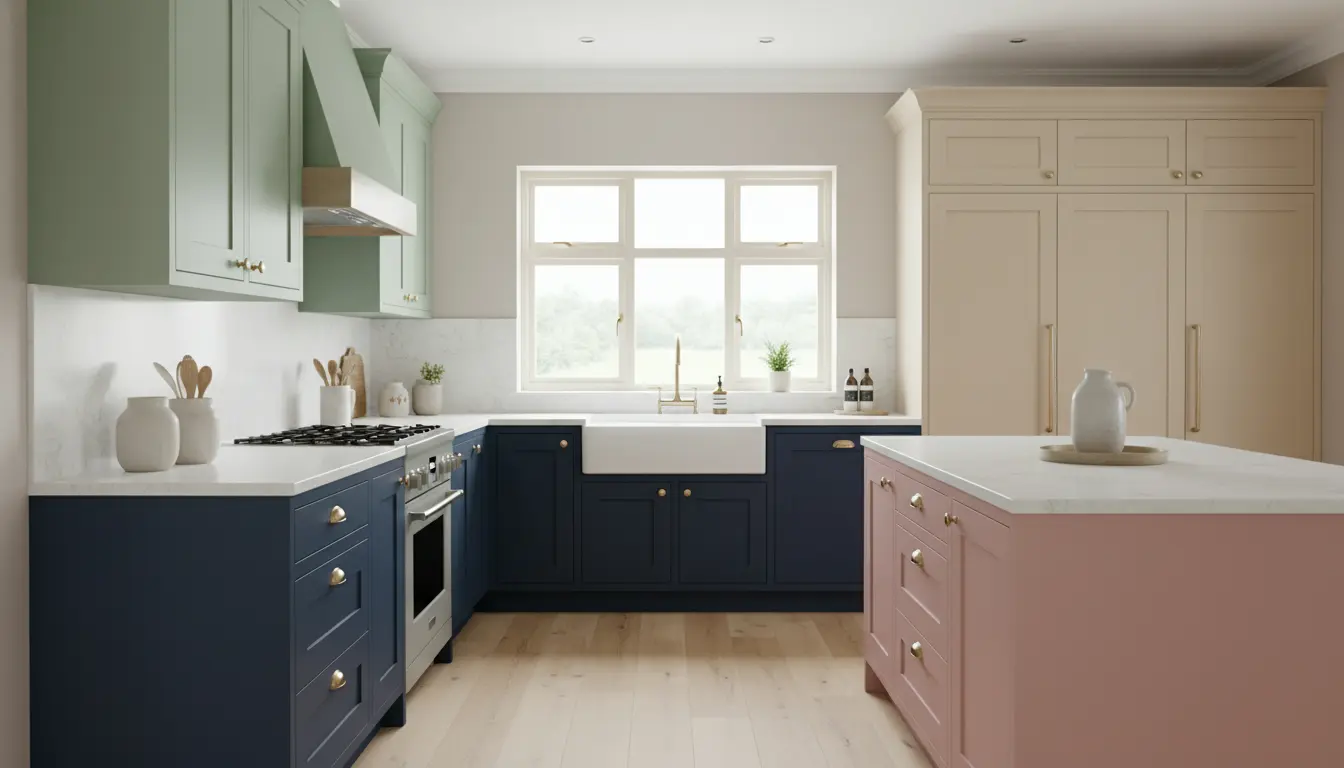
Navy is ideal when you want a richer, more tailored look. It works well on lower cabinets, islands, pantry walls, and full cabinet runs in larger kitchens. Pair it with white countertops, warm metal hardware, or pale oak for balance.
Deep blue is especially effective in open plan homes because it gives the kitchen a strong focal point. It reads as elegant rather than loud, making it a smart option for homeowners who want personality and resale appeal.
Black and charcoal
Black cabinets create drama, contrast, and a high end feel. They look best when the space has enough light or when balanced with light countertops, open shelving, pale flooring, or reflective finishes. Charcoal is slightly softer and often easier to live with than pure black.
In a loft style kitchen with concrete floors and stainless appliances, charcoal flat panel cabinets can look sleek and intentional. In a traditional kitchen, black lower cabinets with white upper cabinets create a polished two tone effect.
Natural wood tones
Wood cabinets are a strong choice when you want warmth and texture. Pale oak feels modern and airy, walnut feels luxurious, and medium wood tones feel classic. Wood also helps soften hard surfaces such as stone, tile, and metal appliances.
Wood finishes are useful if you want color without paint. They hide minor wear better than many painted surfaces and can blend well with both modern and traditional layouts.
Two Tone Cabinets: A Smart Way to Add Contrast
Two tone kitchens are popular because they solve a common design challenge: homeowners want interest, but they do not want the entire room to feel heavy. The most reliable formula is lighter upper cabinets and deeper lower cabinets. This keeps the room open at eye level while grounding the design below.
Reliable two tone combinations
-
Warm white upper cabinets with navy lower cabinets for a crisp, classic look.
-
Soft cream upper cabinets with sage green lower cabinets for a relaxed organic style.
-
Light gray upper cabinets with charcoal lower cabinets for a modern neutral palette.
-
White perimeter cabinets with a dark blue or black island for a focal point.
-
Natural wood lower cabinets with painted upper cabinets for warmth and balance.
Two tone color is also practical. Lower cabinets often receive more scuffs and fingerprints, so a deeper shade below can be easier to maintain in busy households.
Painted Cabinets Versus New Colored Cabinets
If your cabinet boxes are solid, painting may be a cost effective way to transform the kitchen. If the layout is poor, doors are damaged, or storage no longer works, buying new cabinets may deliver better long term value.
Painting existing cabinets
Painting works best when cabinet doors are structurally sound and the style still fits your home. The result depends heavily on preparation: cleaning, sanding, priming, and using a durable cabinet grade finish. Satin and semi gloss finishes are popular because they balance durability with a smooth appearance.
Buying new cabinets
New cabinets are better when you need a new layout, more storage, soft close hardware, different door styles, or a factory finish. Factory finishes are often more consistent than a do it yourself paint job and may resist daily wear better. If you are comparing options, review choices for buy kitchen cabinets to match color with quality, budget, and layout needs.
How Lighting Changes Cabinet Color
A cabinet color can look perfect in a showroom and completely different at home. Natural light, artificial light, and surrounding materials all affect the final appearance.
Before you decide, test the color
-
View samples in morning, afternoon, and evening light.
-
Place samples next to the countertop, floor, backsplash, and wall color.
-
Check undertones carefully. A white may look yellow, gray may look blue, and green may look muddy in low light.
-
Test both vertical and horizontal views because cabinet doors reflect light differently than flat samples.
-
Consider the finish. Gloss reflects more light, while matte and satin feel softer.
North facing kitchens often benefit from warmer cabinet colors. South facing kitchens can handle cooler whites, grays, and deep colors because they receive stronger natural light.
Which Colors Are Easiest to Maintain?
Maintenance matters, especially in homes with children, pets, frequent cooking, or high traffic. Bright white cabinets show fingerprints, sauce splashes, and dust quickly. Very dark cabinets may reveal light dust and water marks. Medium tones often offer the best balance.
Low maintenance options
-
Greige: Hides dust better than white and feels warmer than gray.
-
Sage green: Practical, forgiving, and stylish without being harsh.
-
Medium wood: Naturally disguises small marks and daily wear.
-
Charcoal: Hides darker smudges and creates a sophisticated look.
-
Warm taupe: Works well with stone, wood, and neutral walls.
For the most practical finish, choose a washable cabinet coating or a factory finish made for repeated cleaning. Beauty is important, but cabinets must also survive cooking steam, sticky hands, and everyday use.
What Homeowners Often Notice After Changing Cabinet Color
Many homeowners are surprised by how much a color change alters the whole kitchen. A dated oak kitchen can feel brighter with creamy painted cabinets. A plain white kitchen can feel custom with a navy island. A cold gray kitchen can feel warmer with wood accents or greige doors.
Designers often recommend changing cabinet color before replacing every surface because cabinets visually dominate the room. When the cabinet color is right, existing countertops, flooring, and hardware may suddenly look more intentional.
Common feedback after a successful cabinet color update includes:
-
The kitchen feels larger and brighter.
-
The home feels more current without a full remodel.
-
The color makes existing hardware and countertops look better.
-
The room feels more personal and less builder basic.
-
Guests notice the kitchen immediately.
Match Color to Your Goal
The best cabinet color depends on what you want the kitchen to achieve. If your goal is resale, choose warm white, soft gray, greige, muted green, navy, or natural wood. If your goal is personality, consider deep green, black, blue, or a two tone design. If your goal is easy maintenance, avoid extremely bright or extremely dark extremes and consider medium neutrals.
For a small kitchen
Choose warm white, light greige, pale gray, or light wood. Keep contrast low and use simple hardware. If you want color, apply it to lower cabinets only.
For a luxury kitchen
Consider walnut, black, charcoal, navy, or deep green. Pair with stone countertops, integrated lighting, and refined hardware.
For a family kitchen
Use forgiving shades such as greige, sage, taupe, medium wood, or charcoal lowers with lighter uppers. Choose a durable finish that wipes clean easily.
For a modern kitchen
Flat panel doors in white, black, taupe, pale oak, or muted gray create a streamlined look. Keep the palette simple and let the materials do the work.
Ready to Choose Your Cabinet Color?
If you want a kitchen that feels better every day and adds confidence to your renovation decision, start with samples, compare them in your actual space, and match the color to your lifestyle. Whether you paint, reface, or buy new cabinets, the right color will make the project feel intentional from the first glance.
Need a safe starting point? Shortlist three options: one light neutral, one medium practical shade, and one deeper statement color. Test them at home, review them next to your surfaces, and choose the one that makes the entire kitchen feel complete.
The best Kitchen cabinets colors balance beauty, durability, lighting, and long term value. Warm whites open the room, greige and wood tones add comfort, greens feel calm, and navy or charcoal creates impact. By testing samples and matching color to your countertops, flooring, and lifestyle, you can avoid costly mistakes. Start comparing your favorite shades today and take the next step toward a kitchen you will love living in.
Frequently Asked Questions
What Kitchen cabinets colors are the most timeless?
The most timeless Kitchen cabinets colors are warm white, off white, soft gray, greige, muted green, navy, and natural wood. These shades work with many countertop materials and hardware finishes. They also appeal to a wide range of buyers, which makes them safer if you plan to sell your home later.
Should cabinets be lighter or darker than countertops?
Cabinets can be either lighter or darker than countertops, depending on the effect you want. Light cabinets with darker counters feel grounded and classic. Dark cabinets with light counters feel bold and refined. For a balanced choice, select Kitchen cabinets colors that repeat an undertone already present in the countertop.
Which cabinet colors make a small kitchen look bigger?
Light Kitchen cabinets colors usually make a small kitchen feel larger. Warm white, soft cream, pale greige, and light gray reflect more light and reduce visual weight. To keep the room open, use simple hardware, avoid heavy contrast on upper cabinets, and consider a slightly deeper color only on the lower cabinets.
Are dark kitchen cabinet colors hard to maintain?
Dark cabinet colors can hide food marks and deeper smudges, but they may show dust, water spots, and light fingerprints. Charcoal, navy, and deep green are often easier than pure black. Choose a durable satin or semi gloss finish so your Kitchen cabinets colors stay attractive after repeated cleaning.
Is painting cabinets better than buying new ones?
Painting is best when your cabinet boxes are sturdy, the layout works, and you mainly want a visual refresh. Buying new cabinets is smarter when storage, door quality, or layout needs improvement. In both cases, choosing the right Kitchen cabinets colors helps the finished kitchen feel cohesive, valuable, and personal.
About the Author