Kitchen cabinets plywood gives homeowners a stronger, longer lasting way to upgrade the heart of the home without sacrificing style or practicality. This page helps you choose cabinet construction with confidence, from material benefits to design options, hardware, finishes, and buying considerations. With clear guidance and conversion focused advice, you can compare plywood cabinets against common alternatives and move toward a kitchen that feels beautiful, functional, and built for daily life.
Why plywood cabinets make sense for a busy kitchen
A kitchen is not a showroom that stays untouched. It is opened, closed, wiped, bumped, heated, cooled, and reorganized every day. That is why the cabinet box matters as much as the door style. Plywood is valued because it combines layered strength with practical stability. The cross grained structure helps the cabinet resist movement, while the panels remain lighter than many dense engineered alternatives. For families, keen cooks, landlords, and design minded renovators, that balance can make a meaningful difference.
When you invest in kitchen cabinets plywood, you are choosing a material that supports both beauty and performance. The visible finish may be white, oak, walnut, grey, green, black, blue, or a modern painted surface, but the hidden box still carries the daily workload. A well built plywood cabinet can help keep doors aligned, shelves steady, drawers smooth, and installation secure.
Everyday benefits you will notice
The main advantage of plywood cabinet construction is confidence. It feels solid when you pull open a drawer. It holds fasteners well. It performs reliably around heavy cookware, stacked plates, small appliances, and pantry goods. It is also a smart option when you want a cabinet that can be adapted to many layouts, from a compact apartment kitchen to a large open plan room with an island.
- Durability: layered panels help resist cracking and warping under normal household conditions.
- Strength: plywood is suitable for base cabinets, wall cabinets, tall pantry units, and storage heavy zones.
- Installation support: strong cabinet sides and backs can give installers a dependable structure to level and secure.
- Design flexibility: plywood boxes can pair with classic shaker doors, slab fronts, framed styles, and frameless modern layouts.
- Long term value: the stronger the foundation, the more likely your kitchen will continue to look and function well.
For example, a household that cooks daily may need deep drawers for pots, pull out trays for oils and spices, and a strong sink base that handles moisture exposure better than low grade materials. A plywood cabinet system helps create that practical foundation. In a rental renovation, plywood can also be appealing because it supports repeated use from different occupants while still allowing an attractive finish.
Construction details that separate better cabinets from basic boxes
Not all cabinets are equal, even when they look similar in photos. Pay attention to the entire specification, not only the color and door profile. Better plywood cabinets often include reinforced backs, strong hanging rails, adjustable shelves, smooth drawer boxes, concealed hinges, soft close hardware, and carefully finished edges. These details affect how the kitchen feels years after installation.
Cabinet boxes
The cabinet box is the frame of the storage system. Plywood sides, bottoms, and stretchers offer firm support for hardware and shelves. This is especially important in wall cabinets, where secure mounting is essential, and in base cabinets that hold heavy cookware. If you are comparing options, ask whether the box, shelves, and structural rails are plywood or whether only selected parts use plywood.
Drawer performance
Drawers are often the most used cabinet component. Look for full extension runners, stable drawer boxes, and soft close movement. Full extension access means you can reach the back of the drawer without digging around. Soft close hardware protects the cabinet from repeated slamming and creates a quieter kitchen, which matters in open living spaces.
Finish compatibility
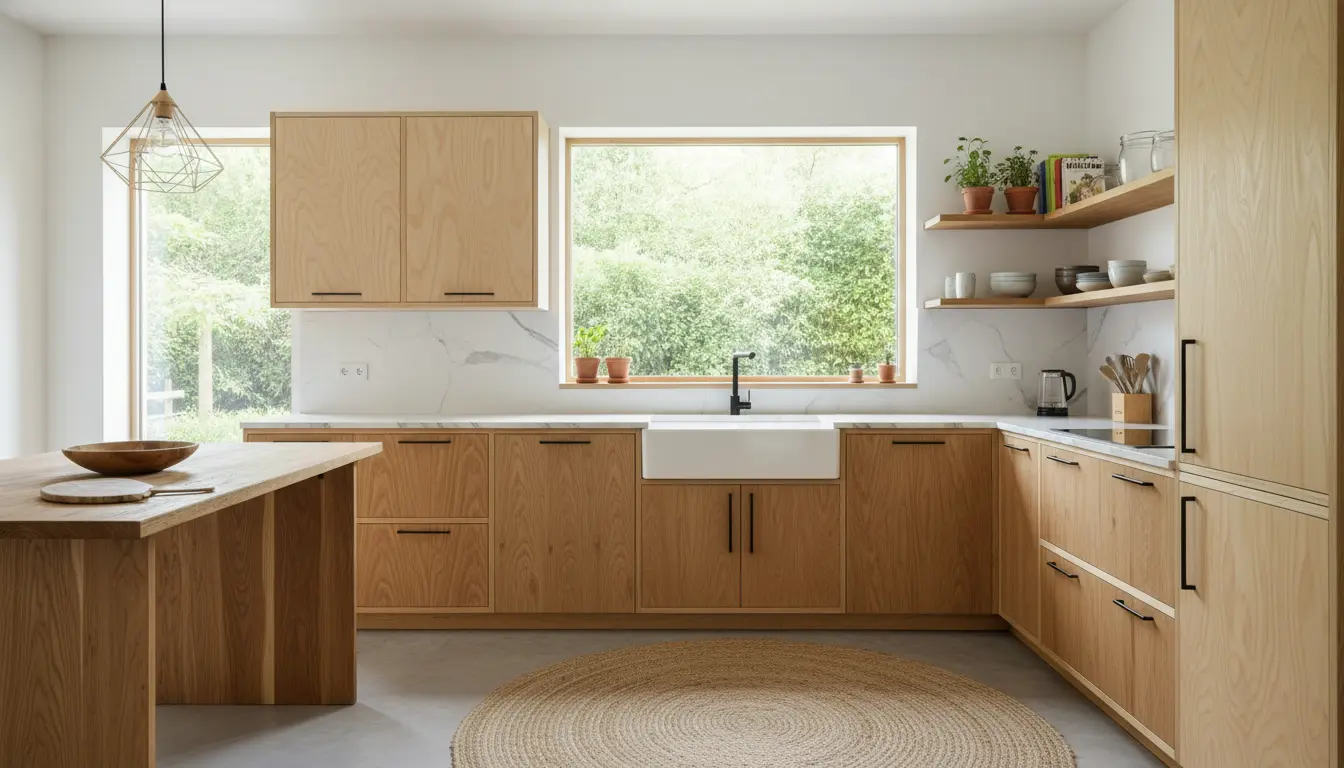
Plywood works with many looks. It can be hidden behind painted doors for a clean transitional kitchen, paired with wood fronts for warmth, or used in a modern design where the layered edge becomes part of the visual character. If you love simple lines, explore modern kitchen cabinets to see how strong construction and contemporary style can work together.
How plywood compares with common alternatives
Many shoppers compare plywood with particleboard and MDF. Each material has a place, and the right choice depends on budget, design goals, moisture exposure, and expected use. MDF can be excellent for smooth painted doors because its surface is consistent. Particleboard can help reduce cost in certain cabinet lines. Plywood, however, is often preferred for cabinet boxes because it offers a strong combination of screw holding ability, lighter handling, and structural resilience.
If your project is a quick cosmetic refresh, a lower cost box may be enough. If you are planning a full kitchen remodel and want cabinets that support daily life for a long time, plywood deserves serious consideration. It is especially useful for families with children, frequent entertainers, home chefs, and anyone storing heavy dishes or appliances.
- Plywood: strong, stable, good for cabinet boxes, shelves, and demanding storage areas.
- MDF: smooth surface, often preferred for painted doors, less ideal where repeated moisture is a concern.
- Particleboard: cost effective, common in budget cabinets, but quality varies widely.
- Solid wood: beautiful for frames and doors, but less common for full cabinet boxes due to movement and cost.
For a balanced kitchen, many buyers combine materials intelligently: plywood boxes for structure, high quality door fronts for style, and reliable hardware for daily comfort. If you are still comparing broad categories, the kitchen cabinet options guide can help you map out the right direction.
Design scenarios where plywood is a smart choice
The family kitchen
In a family kitchen, durability is not optional. Doors are opened during rushed breakfasts, drawers carry snacks, and base cabinets handle cleaning products, pans, and appliances. Plywood cabinet boxes help maintain structure under constant use. Add soft close hinges, wipeable finishes, and smart organizers, and the kitchen becomes easier to live with every day.
The compact apartment
Small kitchens demand efficient storage. Tall wall cabinets, deep drawers, and corner solutions must be strong because every inch is used. Plywood can support storage dense designs without making the room feel compromised. A frameless style can also increase accessible interior space, while a light finish keeps the space open and bright.
The premium remodel
For a high end remodel, plywood is a strong foundation beneath custom fronts, integrated lighting, appliance panels, and a statement island. The visible style may be refined and minimal, but the real luxury is how smoothly the kitchen works. If you want tailored dimensions, special storage, or a custom finish, consider custom kitchen cabinets built around your exact layout.
What buyers and installers appreciate
Homeowners often notice the solid feel first. Installers tend to notice the straight panels, secure fastening, and reliable handling during fitting. Designers appreciate the way plywood construction supports flexible plans, from pantry walls to wide drawer banks. These practical advantages create trust because they show up before, during, and after installation.
Positive feedback commonly centers on three things: the cabinets feel sturdy, the drawers operate quietly, and the kitchen stays organized because the storage can be planned properly. A beautiful door style gets attention on day one, but smooth movement and strong construction earn appreciation over time.
How to choose with confidence
Before you request a quote, gather the essentials. Measure the room, note ceiling height, identify plumbing and appliance positions, and list what you need to store. Then decide which areas need the strongest specification. A sink base, island drawers, pantry cabinets, and heavily used cooking zones are all excellent places to prioritize plywood construction.
Ask clear questions before buying:
- Which cabinet parts are made from plywood?
- Are shelves adjustable and strong enough for heavy items?
- Do doors and drawers include soft close hardware?
- Can depths, panels, finishes, or hinge directions be modified?
- Is the cabinet delivered assembled or ready to assemble?
- What is included in the warranty and after sales support?
Price should be considered, but it should not be the only deciding factor. A cheaper cabinet that needs earlier replacement can cost more in the long run. A stronger cabinet that fits the space, supports better storage, and looks right with your chosen finish can deliver better overall value.
Ready to build a better kitchen foundation?
If you want a kitchen that feels solid, looks refined, and supports real daily use, plywood construction is a smart place to start. Compare layouts, define your must have features, and choose cabinets that match both your style and your routine. The right design partner can help you turn measurements and inspiration into a confident plan, with storage that works from the first day and keeps working long after the remodel is complete.
Start by choosing your preferred style, then confirm the construction details behind it. When the cabinet box, hardware, finish, and layout all work together, your kitchen becomes more than attractive. It becomes a reliable part of everyday life.
Kitchen cabinets plywood offers a strong, practical, and design friendly foundation for a kitchen that must perform every day. With durable cabinet boxes, reliable hardware, flexible layouts, and finish options for both classic and modern homes, plywood helps protect your investment. If you want cabinets that look beautiful and feel solid, take the next step now: compare your options, request expert guidance, and start planning a kitchen built to last.
Frequently Asked Questions
Are Kitchen cabinets plywood worth the higher price?
Kitchen cabinets plywood can be worth the added investment when you want stronger boxes, better fastener holding, and long term stability. The value is most noticeable in busy kitchens, rental homes, and full remodels where cabinets must handle daily use. Compare the total lifespan, not only the starting price.
How do plywood cabinets compare with MDF cabinets?
Plywood is often preferred for cabinet boxes because it is strong, layered, and reliable for mounting hardware and shelves. MDF is commonly used for painted doors because it provides a smooth surface. Many high performing kitchens combine plywood cabinet boxes with MDF or wood doors, depending on finish goals and budget.
Can Kitchen cabinets plywood work in a modern design?
Yes, Kitchen cabinets plywood works very well in modern kitchens. It can sit behind sleek slab doors, handleless fronts, high gloss finishes, or warm wood veneers. Some designs even expose the layered plywood edge for a minimalist architectural detail. The result can be clean, durable, and highly practical.
What should I check before ordering plywood kitchen cabinets?
Check which cabinet parts are plywood, how thick the shelves are, whether drawers use full extension slides, and whether soft close hardware is included. Also confirm finish options, delivery format, warranty, and installation requirements. Clear specifications make it easier to compare quotes and avoid disappointing upgrades later.
Are plywood cabinets suitable for small kitchens?
Plywood cabinets are an excellent option for small kitchens because compact spaces rely on every storage area working hard. Strong wall cabinets, deep drawers, and corner units can safely hold more when the construction is dependable. Pair plywood boxes with smart organizers and light finishes to create a practical, open feeling room.
About the Author