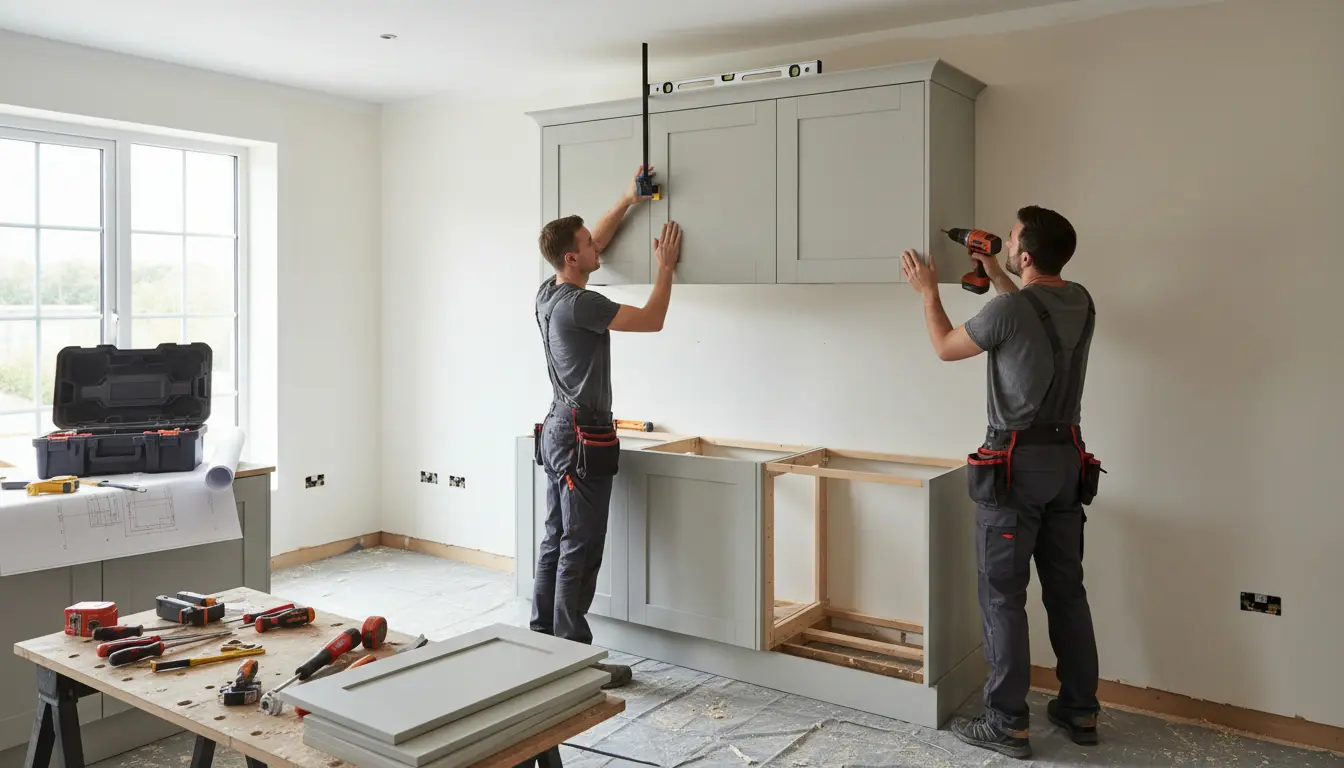
Professional kitchen cabinet installation gives you a faster, safer way to turn boxed cabinets or custom units into a finished kitchen that looks aligned, functions smoothly, and lasts. This page helps you understand what a skilled installer does, what affects cost and timing, and why precise fitting matters. From wall checks to final door adjustment, you get practical guidance, confidence, and a clear path to booking expert help for your kitchen upgrade.
Get Cabinets That Fit, Function, and Finish Beautifully
Kitchen cabinets do more than fill wall space. They determine how your kitchen feels every day: how doors close, how drawers glide, how countertops sit, and how much usable storage you truly gain. Professional kitchen cabinet installation is the difference between a kitchen that simply stands in place and a kitchen that feels built into your home.
A skilled installer works with measurements, wall conditions, floor levels, appliance clearances, plumbing positions, and the weight of each cabinet. That attention matters whether you are replacing a single wall cabinet, installing base cabinets for a new countertop, or fitting a complete kitchen with tall units, corner storage, and integrated lighting.
If you are still choosing your units, you can compare styles and layouts on the kitchen cabinets guide. Once your cabinets are selected, installation becomes the moment where design turns into daily performance.
Why Professional Installation Pays Off
Cabinet installation looks simple until the first wall is not straight, the floor slopes slightly, or the corner cabinet needs to line up with both a sink base and a dishwasher opening. Professionals anticipate these issues before they become expensive mistakes.
- Level alignment: Cabinets are set straight and consistent, so gaps remain even and countertops have proper support.
- Secure wall mounting: Wall cabinets are fixed to suitable structure, not just surface material.
- Cleaner finishing: End panels, plinths, fillers, hinges, and handles are adjusted for a complete look.
- Better durability: Correct fastening reduces sagging, rubbing doors, and premature wear.
- Time savings: A trained installer completes tasks efficiently because the sequence is planned.
For homeowners, this means fewer surprises and a kitchen that is ready for real use. For landlords, it means a more resilient finish in rental properties. For busy families, it means less disruption and a quicker return to cooking, storage, and daily routines.
What Happens During a Professional Cabinet Installation
The installation process follows a clear order. This reduces rework and protects the final result. While every kitchen is different, the most reliable projects usually include the following steps.
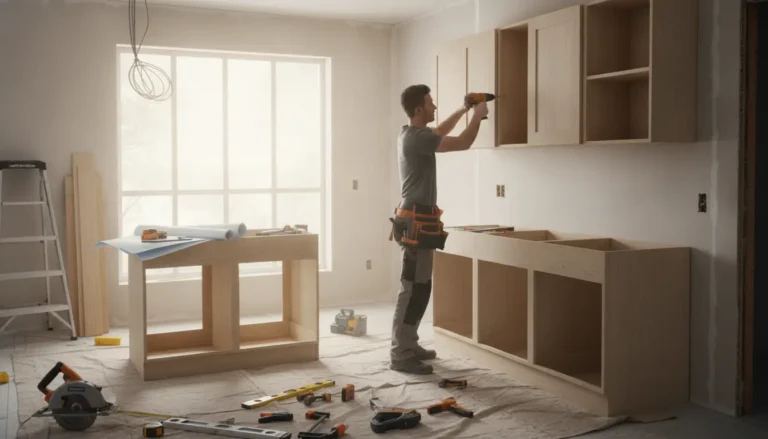
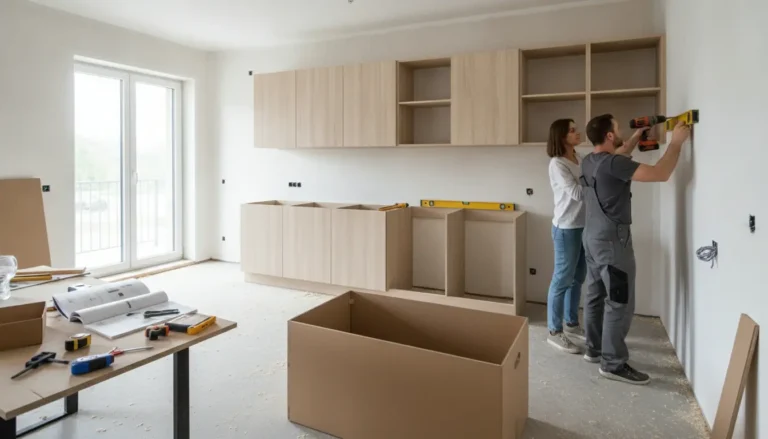
- Site check and measuring: The installer checks wall strength, floor level, ceiling height, cabinet dimensions, and appliance spaces.
- Layout confirmation: Cabinet positions are marked before drilling or fixing begins.
- Base cabinet placement: Lower units are set, levelled, connected, and aligned to support the worktop.
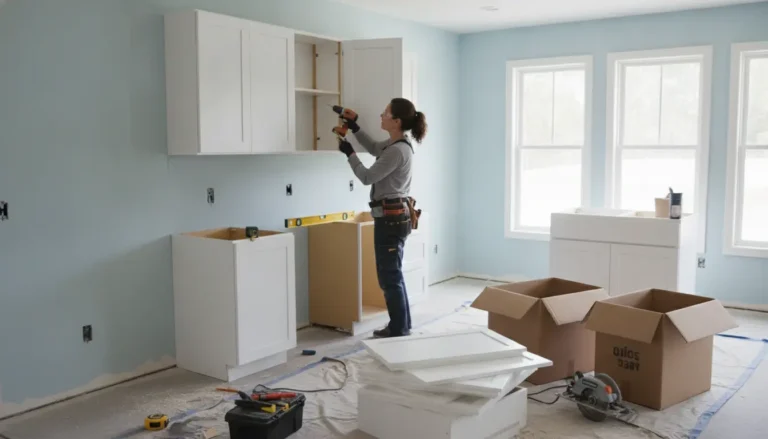
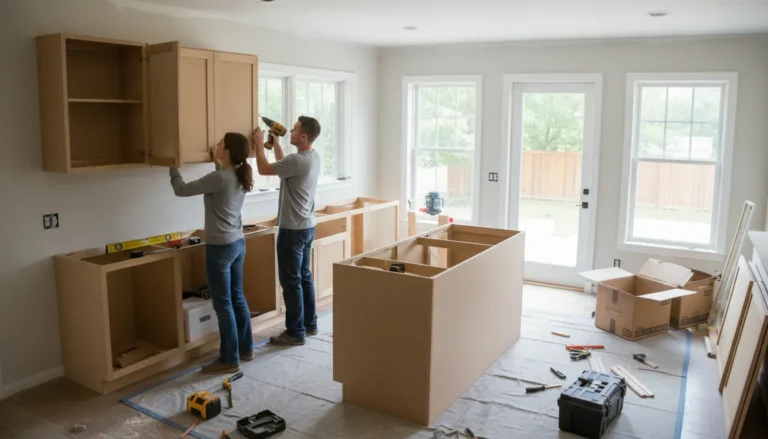
- Wall cabinet mounting: Upper units are fixed at the right height with suitable anchors or rails.
- Doors, drawers, and hardware: Hinges, handles, runners, and soft-close systems are fitted and adjusted.
- Finishing and final check: Fillers, plinths, panels, and visible gaps are reviewed before handover.
Practical Example: A Renovation With Old Cabinets
Imagine a kitchen where the old cabinets have been in place for many years. Once removed, the wall behind them may show uneven plaster, old fixing holes, or areas that need reinforcement. A professional identifies which surfaces can carry new wall cabinets and where extra support is needed. Instead of forcing the new cabinets into a poor surface, the installer creates a stable base for long-term use.
Practical Example: A Compact Apartment Kitchen
In a smaller kitchen, every millimetre matters. A filler that is too wide can steal storage space. A badly placed wall cabinet can block an extractor hood or make a door hit a side wall. Professional kitchen cabinet installation helps maximise usable space while keeping the layout comfortable and compliant with appliance clearances.
What Makes a High-Quality Installation Different
The best results come from precision and judgement, not speed alone. A good installer does not just assemble furniture; they interpret the space. They know when a wall needs extra support, when a cabinet must be scribed to an uneven surface, and when door adjustment should happen after the units are fixed rather than before.
Look for these signs of quality:
- Cabinet faces align across the full run.
- Doors open without rubbing neighbouring cabinets or appliances.
- Drawers glide smoothly and close evenly.
- Wall cabinets feel solid and do not shift under normal use.
- End panels and plinths sit neatly without obvious gaps.
- Appliance openings are measured with enough clearance for fitting and servicing.
This is especially important for modern kitchens with tall pantry cabinets, handleless fronts, high-gloss finishes, pull-out systems, or integrated lighting. These details look premium only when installation is accurate.
Cost Factors You Should Understand Before Booking
The price of cabinet installation depends on the size of the project, the cabinet type, the wall condition, and the level of finishing required. A single wall cabinet is a smaller task than a full kitchen with base units, corner cabinets, tall pantry storage, and custom side panels.
Typical cost drivers include:
- Number of cabinets: More units require more levelling, connecting, and adjustment.
- Cabinet material: Heavier materials may need stronger fixings and more careful handling.
- Wall type: Solid brick, concrete, plasterboard, and old plaster all require different fixing methods.
- Kitchen layout: Corners, islands, high ceilings, and uneven floors add complexity.
- Old cabinet removal: Dismantling and disposal can add time if included in the project.
- Accessories: Pull-out baskets, lighting, soft-close hardware, and internal organisers take extra fitting time.
For more planning insight, review the kitchen cabinet cost guide before you request installation. Knowing the likely variables helps you compare offers more confidently and avoid choosing purely on the lowest price.
Professional Installation Compared With Doing It Yourself
Many homeowners consider installing cabinets themselves to save money. For a simple flat-pack unit in a utility room, that may be realistic. For a kitchen, the risks are higher because cabinets affect countertops, appliances, plumbing access, and the overall appearance of the room.
Do-It-Yourself May Work When
- You are fitting a single small cabinet.
- The wall is strong, straight, and easy to drill.
- No countertop, sink, hob, or integrated appliance depends on the cabinet position.
- You have the right tools and experience with levelling and fixing.
Professional Installation Is the Better Choice When
- You are installing multiple cabinets in one continuous run.
- The kitchen includes corners, tall units, or custom panels.
- The floor or wall is uneven.
- Cabinets must support a heavy countertop.
- You want a clean, sale-ready finish with minimal visible gaps.
The hidden cost of a poor installation can be high. Misaligned base cabinets may affect the countertop. Weak wall fixings can make upper cabinets unsafe. Incorrect hinge adjustment can damage door edges over time. Paying for skilled installation often protects the value of the cabinets themselves.
Designed Around Real Homes, Not Showroom Walls
Showroom kitchens are built in controlled spaces. Real homes are different. Walls may bow slightly, corners may not be square, and old pipework can force small layout changes. Professional kitchen cabinet installation adapts the plan to the actual room while preserving the design intention.
For example, a family replacing dated oak cabinets with clean white shaker units may need old holes filled and new mounting points created. A homeowner upgrading to custom storage may need tall units aligned around a ceiling beam. Someone refreshing a rental property may prioritise durable, easy-clean laminate cabinets and fast turnaround. Each scenario calls for practical decisions on site.
If your layout requires made-to-measure solutions, explore custom kitchen cabinet installation for guidance on specialist fitting needs.
Trust Comes From Clear Preparation
A smooth installation begins before the installer arrives. You can help the project by clearing the work area, confirming that cabinets and hardware have been delivered, checking that all boxes are present, and making sure parking or access is available. If old cabinets are still in place, clarify whether removal is part of the service.
Professional installers also bring structure to the conversation. They can explain what is possible, what may require extra preparation, and where small changes will improve the finished result. This is useful when you are balancing budget, timing, and long-term quality.
Ready for a Kitchen That Feels Properly Finished?
Your cabinets are one of the most visible and heavily used parts of your kitchen. When they are installed correctly, the whole room feels calmer, cleaner, and more valuable. When they are installed poorly, every crooked door and uneven gap becomes a daily frustration.
Choose professional kitchen cabinet installation if you want confident measurements, secure fixing, precise alignment, and a finish that supports the way you actually live. Request expert help, prepare your space, and move from boxes and plans to a kitchen that is ready to use.
Professional kitchen cabinet installation gives you secure mounting, accurate alignment, smoother doors and drawers, and a cleaner finish throughout the kitchen. It also helps prevent costly mistakes with walls, floors, appliances, and worktops. Whether you are fitting one cabinet or completing a full renovation, expert installation protects your investment and saves time. Take the next step today and book a skilled installer to finish your kitchen with confidence.
Frequently Asked Questions
How much does professional kitchen cabinet installation cost?
Professional kitchen cabinet installation costs vary by cabinet type, project size, wall condition, and finishing requirements. A single cabinet is usually more affordable than a complete kitchen with base units, wall units, plinths, fillers, and accessories. Ask for a clear scope before booking so you know whether removal, disposal, hardware fitting, and final adjustment are included.
How long does professional kitchen cabinet installation take?
Professional kitchen cabinet installation can take a few hours for a single wall unit or several working days for a complete kitchen. Timing depends on the number of cabinets, the layout, wall strength, and whether old cabinets must be removed. Complex corners, tall units, lighting, and custom panels usually add extra fitting time.
Can I install kitchen cabinets myself instead of hiring a professional?
You can install a simple cabinet yourself if you have the right tools, a suitable wall, and experience with levelling. However, professional kitchen cabinet installation is recommended for full kitchens, heavy wall units, uneven rooms, and cabinets supporting countertops. A specialist reduces the risk of crooked units, weak fixings, and costly rework.
What should I prepare before the installer arrives?
Before professional kitchen cabinet installation, clear the kitchen, remove loose items, check that all cabinets and hardware have arrived, and keep the installation area accessible. If old cabinets remain, confirm whether removal is included. Sharing appliance measurements, layout drawings, and any known wall or plumbing issues also helps the installer work efficiently.
Are custom cabinets harder to install than standard cabinets?
Custom cabinets often require more careful fitting because they are designed for a specific space and may include special panels, unusual dimensions, or integrated storage. Professional kitchen cabinet installation is especially valuable here because small errors can affect the entire design. A trained installer can adjust to uneven walls while protecting the intended finish.
About the Author