Kitchen cabinets with lighting solve one of the most common kitchen frustrations: dark worktops, hidden storage, and flat-looking design. This page helps you choose cabinet lighting that improves visibility, highlights your favourite finishes, and adds everyday convenience without overcomplicating the purchase. With practical guidance on LED strips, under-cabinet bars, motion sensors, dimming, and style choices, you can compare options confidently and move toward a kitchen that looks premium, works harder, and feels easier to use.
Make every cabinet more useful, beautiful, and easier to buy
The right illuminated cabinetry does more than brighten a corner. It changes how your kitchen functions from morning coffee to late-night clean-up. A well-planned lighting setup can remove shadows from the worktop, make ingredients easier to find, and create a warm atmosphere when the main ceiling lights feel too strong.
For many homeowners, the biggest challenge is not deciding whether lighting is useful. It is knowing which option fits the cabinet layout, budget, and daily routine. Some kitchens need discreet under-cabinet LED bars for chopping and cooking. Others benefit from lit display shelves, motion-activated drawer lighting, or soft over-cabinet glow for ambience. If you are still shaping the bigger layout, explore our guide to kitchen cabinets before choosing the final lighting plan.
Why lighting inside and under cabinets is worth it
Cabinet lighting is one of those upgrades you notice every day. It supports practical tasks, enhances materials, and makes the kitchen feel more complete. Instead of relying only on ceiling lights that cast shadows behind you, targeted lighting places brightness exactly where you need it.
- Clearer work surfaces: under-cabinet lights illuminate chopping boards, coffee stations, sinks, and prep zones.
- Better storage visibility: lights inside cupboards, drawers, and pantry cabinets help you find items quickly.
- Premium visual impact: glass-front cabinets, open shelves, and textured backsplashes look more refined with focused light.
- Flexible mood: dimmable LEDs can shift from bright task lighting to soft evening ambience.
- Efficient daily use: modern LED solutions use little energy while offering strong, consistent output.
Imagine preparing dinner on a cloudy afternoon. With only overhead lighting, your body blocks part of the light and the worktop becomes unevenly lit. Add under-cabinet lighting and the entire prep area becomes clear, safer, and more comfortable. The same benefit applies to a breakfast bar, baking station, or compact apartment kitchen where every surface matters.
Choose the lighting style that fits your kitchen
Under-cabinet LED bars
LED bars are a strong choice for homeowners who want crisp, even light across the worktop. They suit long cabinet runs, cooking zones, and sinks. Many models are slim enough to stay hidden below the cabinet, which keeps the kitchen design clean. Choose a neutral white tone if you want practical task lighting that shows food colours accurately.
LED strip lighting
LED strips are flexible and discreet. They work well beneath cabinets, along shelves, inside display areas, or around feature panels. A strip can follow unusual cabinet shapes and provide a continuous line of light. For a polished result, choose a proper aluminium channel with a diffuser so the light appears smooth instead of dotted.
Motion-sensor cabinet lights
Motion-sensor lighting is ideal for pantry cabinets, deep drawers, corner units, and late-night access. Open the door or reach into the cabinet and the light turns on automatically. This is especially useful for families, busy cooks, and anyone who wants convenience without searching for a switch.
Puck lights and display spots
Puck lights create focused pools of light. They are often used in glass cabinets, open shelving, wine storage, or feature niches. They add a decorative effect and draw attention to ceramics, glassware, or premium cabinet finishes. Use them where a spotlight effect is more desirable than broad worktop illumination.
Details that separate a basic setup from a premium result
Small specifications make a noticeable difference. Before buying, compare brightness, colour temperature, controls, power source, and installation method. The best choice is not always the brightest option. A kitchen needs balanced light that supports tasks without glare.
- Brightness: task zones need stronger light than display cabinets or toe-kick accents.
- Colour temperature: warm white feels cosy, neutral white feels clear, and cool white can suit modern utility zones.
- Dimming: dimmable lights give you control from meal prep to relaxed evenings.
- Power source: wired systems feel seamless, while rechargeable lights can be easier for quick upgrades.
- Controls: switches, remote controls, touch sensors, motion sensors, and smart controls all suit different habits.
- Finish: slim aluminium, white, black, or concealed profiles should match the cabinet style.
If you are comparing complete cabinet upgrades rather than just lighting accessories, our page on buy kitchen cabinets can help you plan the full purchase with more confidence.
Real-life scenarios: which setup should you choose?
For a busy family kitchen: choose bright under-cabinet LED bars in the main prep zone, motion lighting inside pantry cabinets, and a dimmer for evenings. This combination supports cooking, snacks, homework, and cleaning without making the kitchen feel clinical.
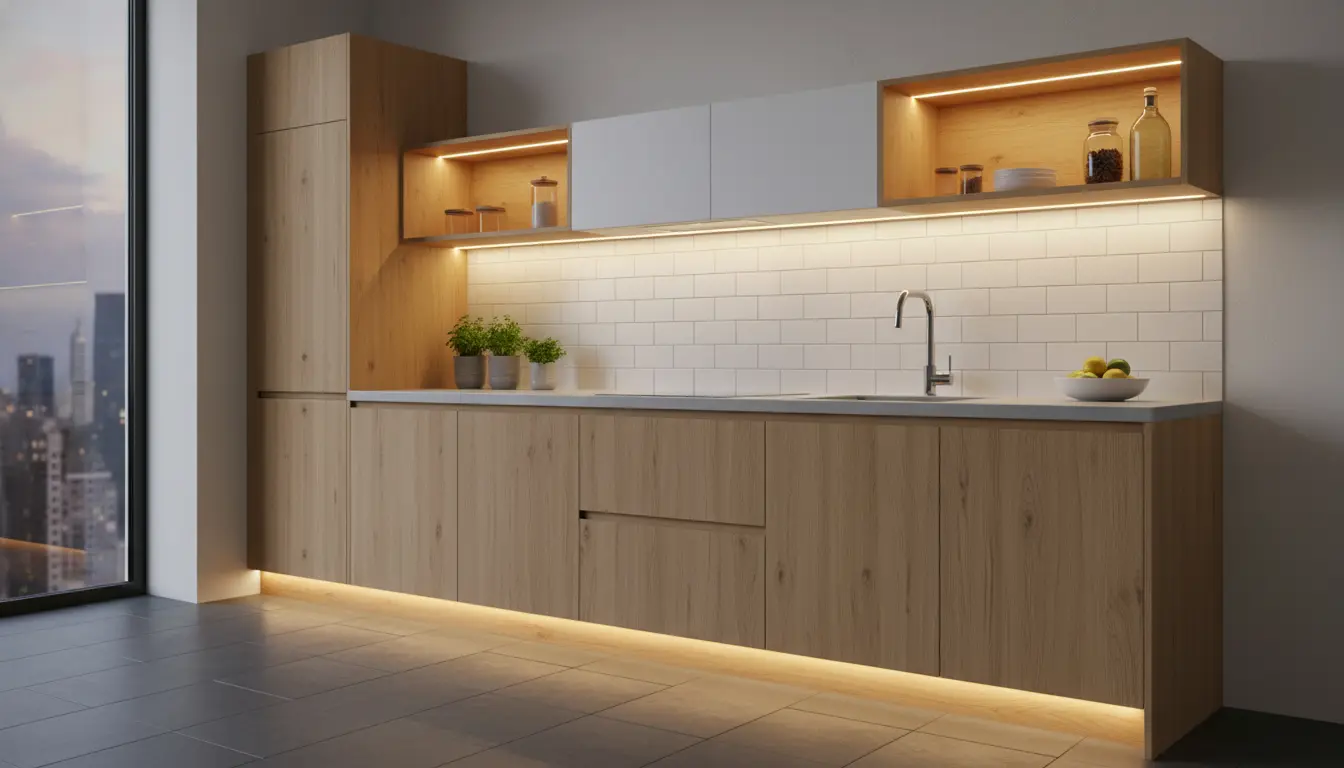
For a modern minimalist kitchen: use concealed LED strips in channels beneath handleless cabinets. Keep the line continuous and select a neutral tone. The result is sleek, architectural, and practical without visible hardware.
For a small kitchen: under-cabinet lighting can make the room feel larger because it removes dark bands between cabinets and worktops. Add internal lights to deep cupboards so every centimetre of storage becomes easier to use.
For a luxury display kitchen: combine glass cabinet lighting with soft under-shelf accents and a dimmable task layer. The cabinets become part of the room design, not just storage. Materials such as wood grain, stone, fluted glass, and matte finishes gain more depth under the right light.
Compare your options before you commit
| Option | Best for | Main advantage | Consideration |
|---|---|---|---|
| Under-cabinet bars | Worktops and cooking zones | Strong, even task lighting | Needs careful placement to avoid glare |
| LED strips | Modern lines and flexible layouts | Discreet and adaptable | Looks best with a diffuser profile |
| Motion lights | Pantries, drawers, and deep cabinets | Hands-free convenience | Battery or charging needs may vary |
| Puck lights | Display cabinets and shelves | Focused decorative impact | Less suitable for broad task lighting |
| Smart lighting | Connected homes | Schedules, scenes, and app control | Requires compatible controls |
What buyers appreciate after installation
Homeowners often start with cabinet lighting for style, but the daily convenience becomes the strongest reason they recommend it. They notice fewer shadows while cooking, easier access to stored items, and a more inviting kitchen in the evening. The upgrade also photographs well, which matters for homes being renovated, rented, or prepared for sale.
Designers frequently recommend layered lighting because it makes cabinetry look intentional. Instead of one flat ceiling light, the kitchen gains depth: task lighting below cabinets, accent lighting inside selected storage, and ambient glow where the architecture allows it. This layered approach helps both traditional and modern kitchens feel more expensive.
Plan the purchase with confidence
Before ordering, measure the width of each cabinet run, identify nearby power points, and decide where switches or sensors should sit. Think about how you cook, not only how the room looks in photos. A coffee station may need a compact bar light, while a long preparation counter may need continuous strips. A pantry may need automatic internal lighting, while display cabinets may need warm, flattering accents.
Budget also matters. You can start with a targeted upgrade in the most-used work zone, then expand to drawers, shelves, or decorative cabinets later. If you want cabinetry that is designed around lighting from the beginning, review our ideas for custom kitchen cabinets and consider where wires, profiles, and switches should be integrated.
Ready to create a brighter kitchen?
The best time to plan lighting is before cabinets are installed, but many solutions can also be added to an existing kitchen. Start with the area that frustrates you most: a dark worktop, a hard-to-see pantry, or cabinets that feel visually flat. Choose an LED solution that fits the way you live, and your kitchen will immediately feel more practical, polished, and enjoyable.
Kitchen cabinets with lighting bring together better visibility, smarter storage, energy-efficient LED performance, and a more premium look. Whether you need under-cabinet task lighting, motion-sensor convenience, or elegant display accents, the right setup can transform everyday cooking and entertaining. Compare your layout, choose the lighting style that fits your routine, and take the next step toward a brighter, more functional kitchen today.
Frequently asked questions about kitchen cabinets with lighting
Are kitchen cabinets with lighting difficult to install?
Kitchen cabinets with lighting can be simple or more advanced, depending on the system. Rechargeable and adhesive LED options are often quick upgrades for existing cabinets. Wired lighting looks more seamless and is best planned during a remodel. If you want hidden cables, integrated switches, or multiple lighting zones, professional installation is usually the cleaner choice.
What type of light is best under kitchen cabinets?
For task lighting, slim LED bars or LED strips with a diffuser are usually the best options. They spread light evenly across the worktop and reduce shadows while cooking. Warm white creates a cosy look, while neutral white is better for food preparation. Dimmable lighting gives the most flexibility throughout the day.
Can I add lighting to existing kitchen cabinets?
Yes, most existing cabinets can be upgraded with lighting. Battery-powered, rechargeable, magnetic, and plug-in LED lights are popular because they avoid major electrical work. For a more built-in finish, you can add concealed channels, wired drivers, and integrated controls. Measure carefully before buying so the light length suits each cabinet section.
Do kitchen cabinets with lighting use a lot of energy?
Modern LED cabinet lighting is generally very energy efficient. It uses far less power than older halogen or incandescent options while producing clear, focused brightness. Motion sensors, dimmers, and timers can reduce energy use further because lights only operate when needed. For most kitchens, the daily running cost remains low.
Is smart lighting worth it for kitchen cabinets with lighting?
Smart lighting is worth considering if you like app control, schedules, voice commands, or preset scenes. It is helpful for open-plan kitchens where lighting also affects the living area. However, simple switches or motion sensors may be enough for purely practical zones. Choose smart controls when convenience and atmosphere matter equally.
About the Author