Kitchen cabinets repair gives you a faster, smarter way to restore doors, drawers, hinges, finishes, and hardware without paying for a full replacement. This page helps you identify the right fix, understand when expert help is worth it, and choose a repair approach that protects both appearance and daily function. With practical guidance, clear comparisons, and homeowner-focused advice, you can make confident decisions and bring your kitchen back to smooth, reliable use.
Restore Function Without Replacing Your Entire Kitchen
Cabinet problems often feel bigger than they really are. A door that hangs unevenly, a drawer that sticks, a loose handle, or a scratched finish can make the whole kitchen look tired. The good news is that many cabinet issues can be repaired efficiently, saving you money, disruption, and decision fatigue. Professional kitchen cabinets repair focuses on targeted improvements: the parts that are damaged are corrected, while the usable cabinet structure stays in place.
This is especially valuable when your cabinet boxes are still strong. If the layout works, the carcasses are stable, and the style still suits your home, repair can deliver a noticeable upgrade without the cost of a full renovation. Instead of removing everything, you restore alignment, movement, safety, and visual appeal.
Common Cabinet Problems That Can Be Repaired
Most homeowners contact a repair specialist after living with small annoyances for too long. These problems may seem minor at first, but they affect how the kitchen feels every day. A reliable repair plan can address several issues during one visit, making the entire space feel better immediately.
Misaligned Doors
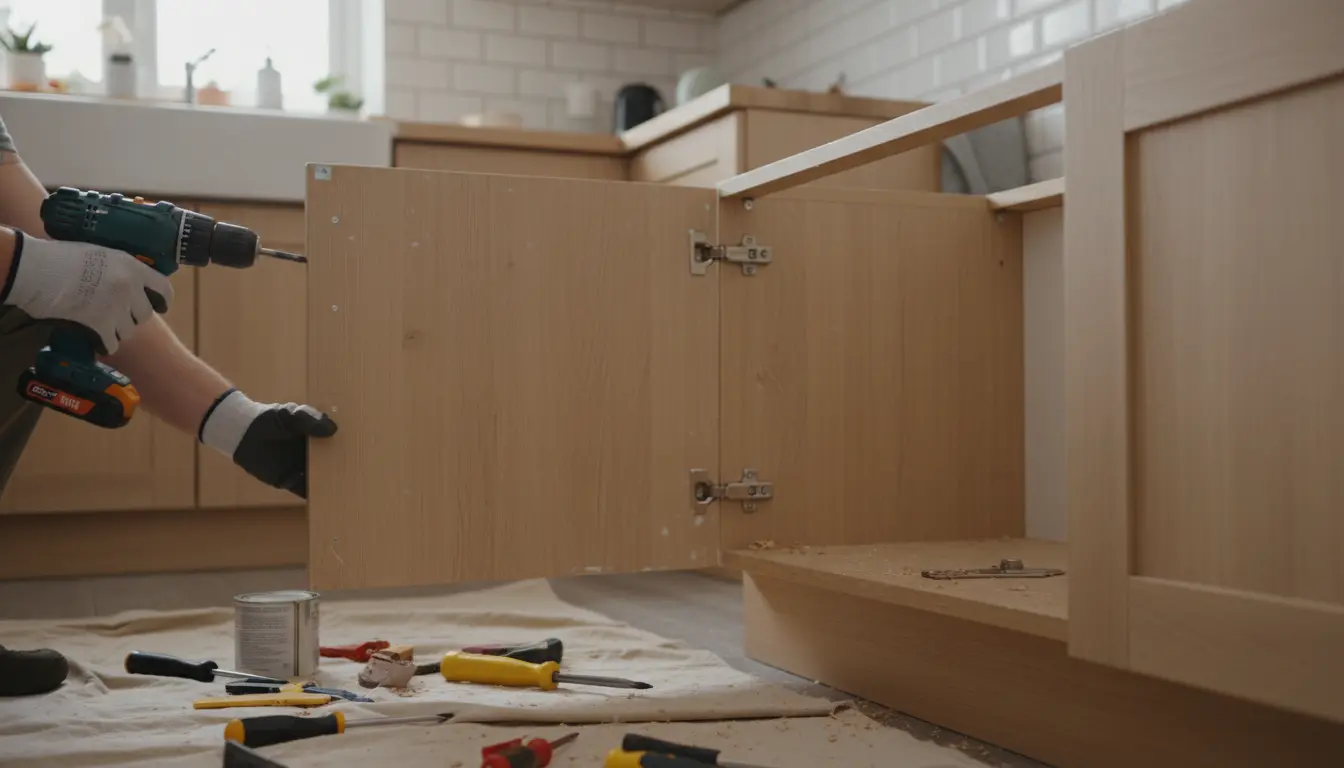
Doors that sit too high, too low, or at an angle are often caused by hinge movement, loose screws, or normal wear. In many cases, the hinges can be adjusted in multiple directions so the doors line up cleanly again. This is one of the quickest improvements and often has the biggest visual impact.
Sticky or Unstable Drawers
Drawers that grind, jam, wobble, or fail to close properly usually point to worn slides, dirty tracks, damaged rollers, or a weakened drawer box. Cleaning and lubrication may solve light sticking, while replacement slides are better when the mechanism is bent or broken. If the drawer box has separated at the corners, glue, clamps, or reinforcement can restore strength.
Loose Handles and Knobs
Hardware can loosen with repeated use. If the screw hole is stripped, simply tightening the screw will not last. A stronger repair may involve filling the hole, using suitable adhesive, or replacing the screw with a better fit. The result is hardware that feels secure instead of shaky.
Scratches, Chips, and Surface Wear
Daily cooking, cleaning, and impact marks leave visible wear on cabinet surfaces. Touch-up markers, filler pencils, wax repair products, or refinishing techniques can reduce the appearance of scratches and chips. Deeper damage may need sanding, filling, and color matching for a cleaner result.
Noisy Cabinet Doors
Banging doors make a kitchen feel less refined. Soft bumpers, hinge adjustment, or upgraded closing hardware can reduce noise and protect the cabinet frame from repeated impact. This is a simple repair that improves comfort instantly.
Why Repair Often Makes More Sense Than Replacement
Full replacement has its place, but it is not always the best first option. Repair is ideal when the cabinet structure is solid and the problems are mostly mechanical or cosmetic. It lets you preserve the kitchen you already know while improving the details that matter most.
-
Lower cost: Repair focuses spending on the damaged areas instead of replacing usable materials.
-
Less disruption: Many repairs can be completed without emptying the entire kitchen or pausing normal routines for days.
-
Faster results: Adjustments, hardware fixes, and drawer repairs often create visible improvements quickly.
-
More sustainable: Keeping quality cabinet boxes out of waste streams is better for the environment.
-
Preserved style: If your cabinets match your home, repair helps maintain the existing design rather than forcing a full change.
If you are comparing repair with a larger upgrade, it can help to review broader cabinet options. For inspiration and planning, visit kitchen cabinets to understand styles, materials, and layout possibilities before making a final decision.
What Sets a Quality Repair Apart
A quick fix is not the same as a lasting repair. The difference is in diagnosis, material choice, alignment, and finish quality. A skilled repair approach starts by identifying why the problem happened. For example, a crooked door may not only need hinge adjustment; it may also have a stripped mounting screw. A sticky drawer may not only need lubricant; the slide may be worn or installed out of square.
Quality repair also considers how the cabinet will be used after the work is done. A heavily used pan drawer needs stronger support than a light cutlery drawer. A cabinet near the sink may need moisture-resistant repair products. A family kitchen with frequent use may benefit from more durable hardware than a rarely used guest kitchen.
Details That Improve the Final Result
-
Accurate hinge adjustment for even gaps between doors.
-
Secure screw repairs that prevent repeat loosening.
-
Smooth drawer movement with properly matched slides.
-
Color-conscious touch-ups that blend with the existing finish.
-
Practical advice on maintenance to reduce future damage.
Real-Life Scenarios Where Repair Delivers Value
Imagine a kitchen where every upper cabinet door closes at a slightly different angle. Nothing is broken completely, but the room looks untidy. A repair visit can realign hinges, tighten mounting plates, and add quiet bumpers. The kitchen immediately looks more intentional and feels better to use.
Another common scenario is a deep drawer that holds heavy pots. Over time, the slide bends and the drawer scrapes against the cabinet side. Replacing the slide with a suitable heavy-duty option can restore smooth movement and prevent further damage to the drawer box.
In a rental property, cabinet repair can be especially cost-effective. Instead of replacing the entire kitchen between tenants, the owner can fix hinges, secure handles, repair drawer boxes, and touch up scratches. This improves presentation while keeping the project budget under control.
For homeowners preparing to sell, small cabinet repairs can support a stronger first impression. Buyers notice doors that line up, drawers that glide, and handles that feel solid. These details suggest that the home has been maintained with care.
Repair, Refinish, or Replace: How to Choose
The best choice depends on the condition of the cabinet structure, the finish, and your goals. Repair is best for functional issues and localized damage. Refinishing is better when the cabinets work well but the surface looks dated or worn. Replacement is most suitable when the layout fails, the boxes are weak, or moisture damage is widespread.
-
Choose repair when hinges, drawers, catches, knobs, or small damaged areas are the main concern.
-
Choose refinishing when the cabinet surfaces are broadly faded, scratched, or no longer match your preferred style.
-
Choose replacement when the cabinet boxes are swollen, cracked, unstable, or poorly planned for your storage needs.
If repair is no longer enough, you can compare alternatives through kitchen cabinets replacement. If budget is your main concern, reviewing kitchen cabinets cost can help you weigh repair savings against a larger investment.
What Homeowners Appreciate Most
People often expect cabinet repair to make the kitchen look a little better. What surprises them is how much more comfortable the kitchen becomes. When doors close quietly, drawers move smoothly, and hardware feels solid, everyday tasks become easier. Cooking, cleaning, unloading groceries, and setting the table all feel less frustrating.
Homeowners also appreciate avoiding a long renovation. There is no need to choose every new cabinet, remove countertops, or live with an unusable kitchen. Targeted repair respects the kitchen you already have and improves it where it counts.
Many homeowners describe cabinet repair as a small project with a large daily payoff: less noise, better movement, cleaner lines, and fewer reminders that something is broken.
Simple Maintenance After Repair
Once your cabinets are repaired, a few habits can keep them performing well. Avoid slamming doors and drawers. Wipe spills quickly, especially near the sink, dishwasher, and coffee station. Do not overload drawers beyond what the slides can support. Clean tracks occasionally so crumbs and grease do not create friction. Tighten handles gently when they first begin to move instead of waiting until the screw hole is damaged.
Use mild cleaners rather than harsh abrasives, especially on painted, laminate, or high-gloss finishes. If you notice a new gap, scrape, or wobble, address it early. Small cabinet problems are usually cheaper and easier to repair before they spread.
Ready to Make Your Cabinets Work Like New?
If your kitchen cabinets are mostly solid but no longer look or function the way they should, repair is a practical next step. It helps you avoid unnecessary replacement, extends the life of your existing kitchen, and restores the details you use every day. From hinge adjustment and drawer slide replacement to stripped screw repair and surface touch-ups, the right solution can make your kitchen feel refreshed without a full remodel.
Take a close look at your doors, drawers, hardware, and finishes. Make a short list of the issues that bother you most. Then choose a repair-focused approach that solves those problems directly. Your kitchen does not need to be perfect to feel dramatically better; it simply needs the right repairs in the right places.
Kitchen cabinet repair is a cost-effective way to restore smooth movement, clean alignment, secure hardware, and a better-looking finish without committing to a full replacement. When the cabinet structure is still strong, targeted repairs can save money, reduce disruption, and extend the life of your kitchen. Do not keep living with sticking drawers, crooked doors, or loose handles. Start with a focused repair plan and make your kitchen work beautifully again.
Frequently Asked Questions
Is kitchen cabinets repair cheaper than replacement?
Yes, kitchen cabinets repair is usually cheaper when the cabinet boxes are still solid and the issues are limited to doors, hinges, drawers, hardware, or surface damage. Replacement becomes more sensible when the layout is poor, moisture damage is widespread, or the structure is no longer stable.
Can misaligned cabinet doors be fixed without new doors?
In many cases, yes. Misaligned cabinet doors often need hinge adjustment, tightened mounting screws, or repaired screw holes. If the door itself is not warped or cracked, a careful adjustment can restore even gaps and proper closing without ordering new doors.
What causes drawers to stick or stop closing smoothly?
Sticky drawers are commonly caused by dirty tracks, worn rollers, bent slides, overloaded storage, or a drawer box that has shifted out of square. Kitchen cabinets repair may include cleaning, lubrication, slide replacement, or reinforcing weak joints so the drawer glides properly again.
Can scratches and chips in cabinet finishes be repaired?
Light scratches and small chips can often be improved with touch-up markers, filler pencils, wax products, or careful color matching. Deeper damage may need filling and sanding. The goal is to blend the repair with the existing finish so the cabinet looks cleaner and better maintained.
When should I replace instead of repair my kitchen cabinets?
Replacement is worth considering when cabinet boxes are swollen, cracked, unstable, or badly damaged by moisture. It may also be better if the layout no longer supports your storage needs. If the structure is strong, kitchen cabinets repair is usually the smarter first option.
About the Author