Kitchen cabinets organizers give you an immediate way to turn crowded shelves, messy drawers, and hard-to-reach corners into practical storage that works every day. This page helps you choose smart cabinet solutions for cookware, lids, pantry goods, spices, cleaning supplies, and more. With expert guidance, clear examples, and conversion-focused recommendations, you can confidently select organizers that fit your cabinets, improve access, and make your kitchen feel cleaner, calmer, and more efficient.
Turn Every Cabinet Into Usable Storage
A kitchen rarely feels too small because of its actual size. More often, it feels small because cabinet space is not being used well. Deep shelves hide items at the back, pans stack awkwardly, lids fall over, spices disappear, and under-sink areas become a collection of half-used bottles. Kitchen cabinets organizers solve these everyday frustrations by creating zones, levels, pull-out access, and clear separation.
The right organizer does more than make things look tidy. It changes how your kitchen functions. When cookware slides out smoothly, when spices are visible, and when food containers have a dedicated place, cooking becomes faster and less stressful. You spend less time searching, less money replacing items you already own, and less energy reorganizing the same clutter again and again.
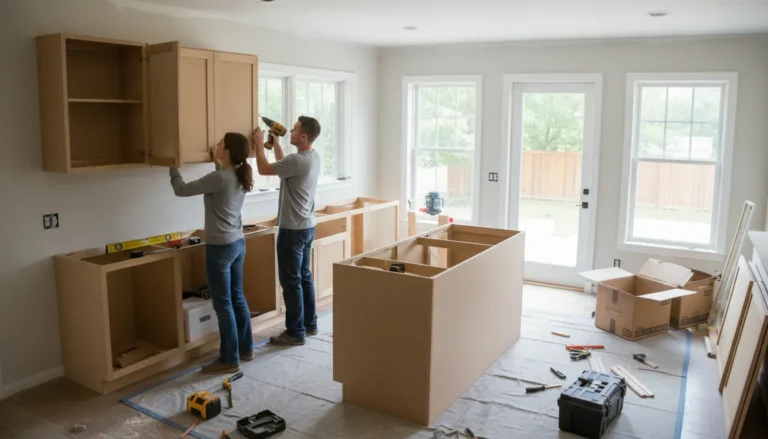
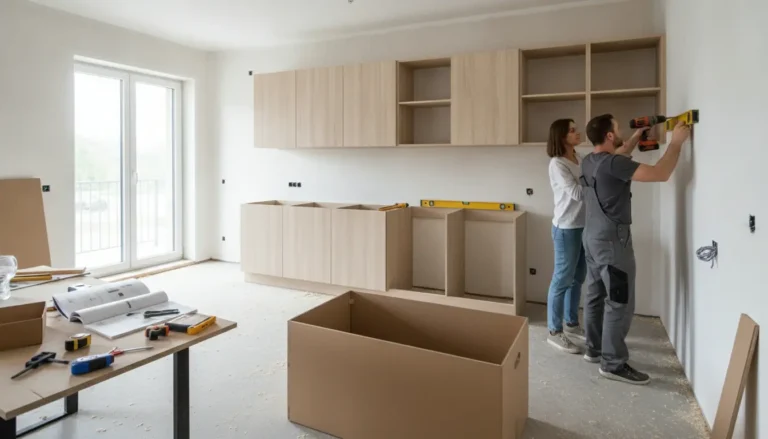
Whether you are refreshing an existing kitchen or planning new cabinetry, organizers help you make the most of every cabinet. If you are still choosing the base layout, explore our guide to kitchen cabinets to understand how cabinet style, depth, and placement affect storage performance.
Why Cabinet Organizers Are Worth It
Many people start with simple baskets or bins, then quickly realize that purpose-built organizers deliver a bigger improvement. A cabinet organizer is designed around a specific problem: reaching the back of a lower cabinet, separating pan lids, doubling vertical shelf space, or keeping cleaning products upright. That targeted design makes the difference between temporary tidiness and lasting order.
Better access without remodeling
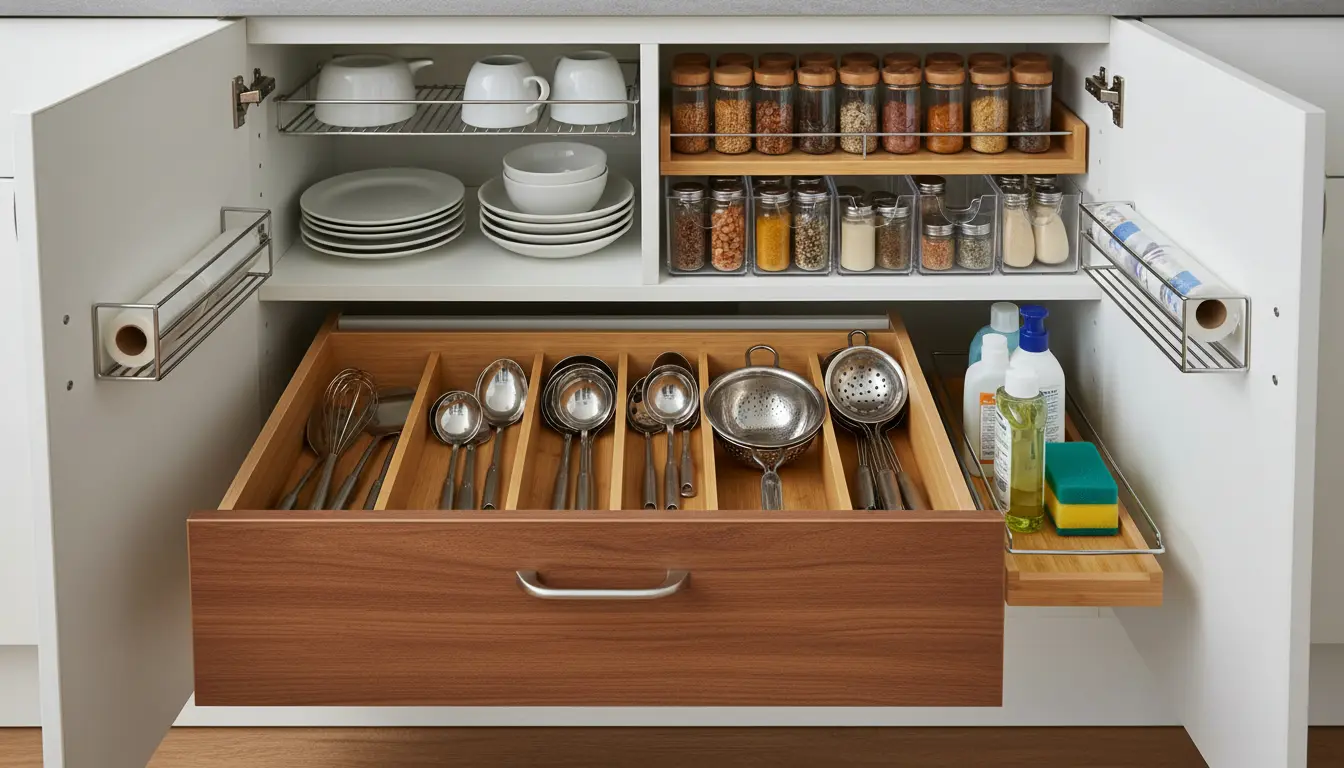
Pull-out drawers, sliding baskets, rotating trays, and tiered shelves can transform cabinets without changing the cabinet box itself. This is ideal for homeowners who want a visible improvement without a full renovation, and for renters who need removable options that do not damage the kitchen.
More space from the cabinets you already have
Vertical space is often wasted. Shelf risers, stackable bins, and expanding racks let you store items above and beside each other without creating unstable piles. In a pantry cabinet, that can mean separating breakfast items from baking ingredients. In a cookware cabinet, it can mean pans stand upright instead of nesting in a heavy stack.
A cleaner daily routine
Organized cabinets are easier to clean because items have fixed homes. Clear bins can be lifted out, pull-out systems reveal hidden spills, and under-sink organizers prevent bottles from tipping onto cabinet floors. Over time, this reduces mess and protects your cabinetry from unnecessary wear.
-
Use pull-out drawers for deep base cabinets where items disappear at the back.
-
Use turntables for oils, sauces, spices, vitamins, or small jars that need quick access.
-
Use lid racks for food containers, saucepan lids, cutting boards, and baking trays.
-
Use door-mounted storage for wraps, cleaning cloths, measuring spoons, or lightweight supplies.
-
Use under-sink organizers to separate cleaning products, sponges, bags, and dishwasher supplies.
Designed for Real Kitchen Problems
The best kitchen cabinets organizers are not one-size-fits-all. They are chosen around how you cook, shop, clean, and store. A busy family may need easy-access snack bins and lunchbox zones. A home cook may prioritize cookware racks, spice steps, and strong pull-out shelves. A small apartment kitchen may need slim cabinet door storage, stackable containers, and compact turntables.
Scenario: the deep lower cabinet
A deep cabinet often becomes a storage trap. You place large pans in front, small appliances behind them, and soon the back of the cabinet is forgotten. A sliding cabinet drawer fixes this by bringing the contents to you. Use it for mixing bowls, pots, pantry refills, or bakeware. Instead of kneeling and unloading the front row, you simply pull the organizer forward.
Scenario: the chaotic food container shelf
Food containers are useful, but their lids create frustration. A divided lid holder keeps lids upright and sorted by size. Pair it with stackable clear bins for the containers themselves. This setup works especially well in upper cabinets, where visual order matters because you are reaching at eye level.
Scenario: the crowded spice cabinet
Spices stored in a flat row become difficult to scan. A tiered shelf lifts the back rows so every label is visible. If the cabinet is narrow or deep, a small turntable may be better, especially for oils, seasonings, and condiments. The goal is simple: see everything at once and grab what you need without moving five other items first.
Scenario: the under-sink cabinet
The under-sink zone has pipes, awkward corners, and moisture risk. Choose organizers that work around plumbing and keep products upright. Sliding baskets, open bins, and raised shelves make it easier to separate cleaners, dish soap, trash bags, and spare sponges. If your kitchen cabinets are older, protective liners can also help preserve the base surface.
Features That Make a Bigger Difference
When comparing organizers, look beyond the first impression. A beautiful bin is helpful, but fit, durability, access, and maintenance determine whether you will still love it months later. Measure cabinet width, depth, height, door opening, hinge placement, and any pipes or shelf supports before buying. A few minutes of measuring prevents returns and ensures the organizer works as intended.
Adjustability
Expandable shelves, adjustable dividers, and movable compartments adapt as your storage needs change. This is valuable if you buy different food brands, change cookware, or reorganize seasonally. Adjustable organizers are also useful in shared homes where kitchen habits evolve over time.
Sturdy materials
Metal pull-outs are strong for cookware and appliances. Bamboo or wood inserts bring a warm look to visible storage. Clear plastic bins are practical for pantry and snack zones because you can identify contents quickly. For under-sink storage, water-resistant materials are usually the smartest choice.
Easy installation
Some organizers simply sit on a shelf. Others use adhesive, tension, or screws. If you own your home and want maximum strength, fixed pull-out systems can be excellent. If you rent, choose freestanding, no-drill, or removable solutions. Always match the installation method to the weight of the items you plan to store.
What Customers Commonly Appreciate
People who upgrade their cabinet storage often mention the same benefits: they can find items faster, their kitchen feels larger, and cooking becomes more enjoyable. The most appreciated organizers are usually the ones that remove repeated irritation. A pan rack that stops heavy stacking, a turntable that prevents forgotten jars, or a pull-out drawer that saves your back can feel like a daily luxury.
Another common advantage is better shopping control. When pantry goods, spices, and cleaning supplies are visible, it is easier to see what you already have. That means fewer duplicate purchases and less expired food hiding in the back of a cabinet. For households trying to reduce waste, organized storage supports better habits without extra effort.
Choosing the Right Type for Each Cabinet
Different cabinet zones need different solutions. Before adding anything to your cart, decide what problem you want to solve first. If the problem is visibility, choose clear bins, tiered shelving, or turntables. If the problem is access, choose pull-out drawers or slide-out baskets. If the problem is separation, choose dividers, racks, or dedicated holders.
Upper cabinets
Upper cabinets are best for lighter items and visible categories. Use shelf risers for mugs, plates, and bowls. Use small bins for tea, snacks, baking decorations, or supplements. Use tiered racks for spices, but make sure the top tier does not block the cabinet door.
Lower cabinets
Lower cabinets are ideal for heavier items, but they need access support. Pull-out organizers are especially effective here. They are excellent for pots, pans, small appliances, mixing bowls, and pantry refills. If you have a blind corner cabinet, a rotating or swing-out system can recover space that would otherwise be difficult to use.
Pantry cabinets
Pantry cabinets work best when grouped by routine. Keep breakfast items together, baking items together, snacks together, and dinner staples together. Clear bins and labels help everyone in the household return items to the right place. If you are planning a broader upgrade, our kitchen cabinets storage guide can help you match cabinet design with practical organization.
New cabinet purchases
If you are buying cabinets soon, plan organizers before you finalize the order. Cabinet depth, drawer placement, and shelf height will influence what fits. For shoppers comparing options, our page on buying kitchen cabinets is a useful next step before choosing internal accessories.
Simple Steps Before You Buy
-
Empty one cabinet and group similar items together.
-
Remove anything expired, duplicated, damaged, or rarely used.
-
Measure the interior cabinet space and the door opening.
-
Choose the organizer type that solves the main problem.
-
Test the layout with everyday items before filling the cabinet completely.
Starting with one cabinet keeps the project manageable. Many shoppers begin with the cabinet that causes the most frustration, such as cookware, food containers, spices, or under-sink supplies. Once that area works well, it becomes easier to repeat the system throughout the kitchen.
Make Your Kitchen Feel Easier Today
A well-organized kitchen supports the way you actually live. It helps you cook faster, clean up with less effort, and enjoy a space that feels intentional rather than crowded. Choose kitchen cabinets organizers that fit your cabinet dimensions, match your routine, and solve a specific storage problem. Start with one high-impact cabinet today, then build a system that makes every meal easier.
Kitchen cabinets organizers are a practical upgrade with an immediate payoff: more usable space, easier access, cleaner cabinets, and less daily frustration. From pull-out drawers and lid racks to turntables, bins, and under-sink solutions, the right setup helps every item earn its place. Start with your most cluttered cabinet, choose the organizer that solves the real problem, and create a kitchen that works beautifully every day.
Frequently Asked Questions
What are the best Kitchen cabinets organizers for small kitchens?
The best Kitchen cabinets organizers for small kitchens are pull-out drawers, tiered shelves, door-mounted racks, slim bins, and turntables. These options use vertical space and hidden areas without taking up extra floor space. Start with cabinets that store daily essentials, because improving those zones creates the biggest difference in everyday convenience.
Do I need to drill into my cabinets to install organizers?
Not always. Many Kitchen cabinets organizers are freestanding, expandable, adhesive, or designed to sit directly on a shelf. These are ideal for renters or quick upgrades. For heavy cookware or deep base cabinets, screw-mounted pull-out systems may offer better strength and stability, especially when storing pots, pans, or appliances.
How do I measure before buying cabinet organizers?
Measure the inside width, depth, and height of the cabinet, then measure the actual door opening. Also check hinges, pipes, shelf supports, and any raised cabinet lips. For Kitchen cabinets organizers that slide out, make sure the organizer can clear the door frame and handle the weight of your stored items.
Which organizers work best under the sink?
Under-sink cabinets need organizers that fit around plumbing and resist moisture. Sliding baskets, open bins, raised shelves, and adjustable racks usually work well. Choose Kitchen cabinets organizers that keep bottles upright and separate cleaning supplies from sponges, bags, and dishwasher items. A removable liner can also protect the cabinet base.
Are cabinet organizers worth buying if my cabinets are old?
Yes, organizers can make older cabinets far more functional without a renovation. Freestanding shelves, bins, lid racks, and turntables refresh storage quickly. If the cabinet structure is still solid, Kitchen cabinets organizers can improve access, reduce clutter, and help protect surfaces while you decide whether a larger kitchen upgrade is needed.
About the Author