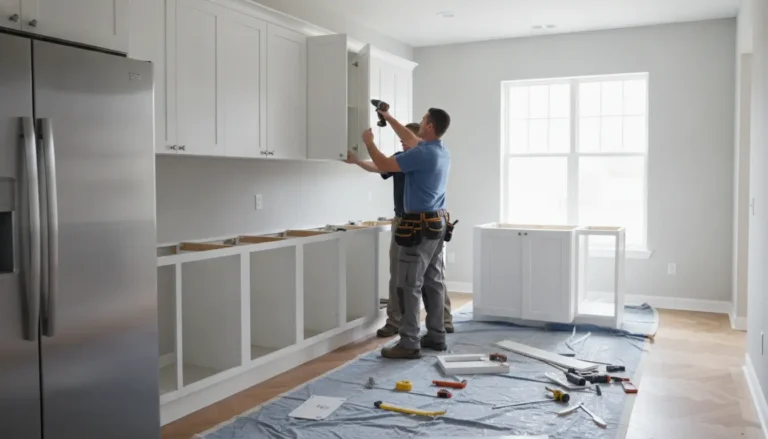

A kitchen cabinet installation service helps turn your kitchen plan into secure, level cabinets with doors and drawers that work smoothly. Whether you are replacing a compact apartment kitchen or fitting a complete new layout, this page helps you understand the work, compare installers and request a clearly defined quote. From checking wall strength to agreeing on finishing details, careful preparation reduces avoidable surprises. Discover what to prioritise for a practical kitchen, a tidy finish and a more predictable installation.
Get Cabinets That Look Right and Work Effortlessly
Beautiful cabinets need more than careful assembly. Their everyday performance depends on accurate positioning, suitable fixings and consistent alignment. A slightly uneven cabinet run can affect worktop fitting, while poorly adjusted hinges can leave doors rubbing against neighbouring fronts.
Professional installation brings those details together. The aim is a kitchen where drawers open freely, tall units stand securely and storage feels comfortable to use. Choosing the right installer also gives you a clear person to contact when a fitting detail needs attention.
- Consistent alignment: cabinet fronts, drawer gaps and handles form a balanced finish.
- Secure installation: fixings and support suit the wall construction and cabinet system.
- Better daily use: doors, drawers and internal fittings operate without unnecessary interference.
- Coordinated preparation: cabinet positions account for appliances, pipes and electrical connections.
- Clearer responsibility: the agreed scope explains who handles assembly, fitting and finishing.
Know Exactly What Your Installation Includes
Not every kitchen cabinet installation service covers the same work. One quote may include assembling flat-pack units and fitting decorative panels, while another assumes the cabinets arrive assembled. Comparing the total price without checking these details can be misleading.
Base, Wall and Tall Cabinet Fitting
A typical cabinet fitting scope can include setting out the layout, assembling units, levelling base cabinets, securing cabinet runs and mounting wall units. Tall cabinets need particular attention to stability, appliance clearances and access through the property.
Ask whether the price also includes hinges, drawer adjustment, handles, plinths, filler panels and end panels. These finishing tasks make a substantial difference to the completed appearance, but they should not be assumed to be included.
Worktops, Appliances and Connections
Cabinet fitting and complete kitchen installation are different scopes. Worktop cutting, sink installation, appliance connections and splashbacks may need separate arrangements. Stone worktops may also require specialist measurement after the base cabinets are installed.
Electrical alterations and gas work should be handled by appropriately qualified professionals. Confirm who coordinates these trades, especially when changing from gas cooking to induction. Cabinet installation alone does not establish that the electrical supply is suitable.
Start With the Room, Not Just the Kitchen Drawing
A showroom plan describes the intended layout, but the room determines how it can be fitted. Walls may be uneven, floors may slope and pipework may occupy space shown as available storage. Identifying these conditions early helps prevent rushed decisions on installation day.
For example, wall cabinets in an older Utrecht apartment may meet masonry that needs assessment before drilling. In a newer property, plasterboard walls may require suitable reinforcement or fixings into structural supports. The correct approach depends on the actual construction, not simply the age of the home.
- Check room dimensions against the final cabinet plan.
- Identify wall construction and suitable fixing positions.
- Confirm finished floor levels and worktop height.
- Check appliance openings, ventilation requirements and door clearances.
- Locate pipes, sockets and other services before fixing cabinets.
- Agree how uneven walls, gaps and exposed edges will be finished.
If your layout is still developing, explore kitchen cabinet options before committing to an installation schedule. Choosing the right cabinet dimensions first can avoid expensive changes later.
A Clear Route From Quote to Final Adjustment
Share the Details That Make a Quote Useful
Provide the kitchen plan, cabinet brand, product list and photographs of the room. Explain whether the old kitchen will remain in place until the fitting date and whether removal or disposal is required. Include photographs of visible pipework and the relevant electrical connections where practical.
Access matters too. A narrow staircase, limited parking or a long route from the unloading point can affect planning. In central Utrecht or Amsterdam, check whether building access, loading arrangements or local restrictions need advance coordination.
Agree on Preparation and Scheduling
Before confirming a date, establish which tasks must be completed first. Wall repairs, floor preparation and service alterations can affect cabinet positioning. Ask who checks deliveries for missing or damaged components and how shortages will affect the schedule.
For example, a missing corner fitting may prevent completion of part of the cabinet run. Finding that out before the installer arrives is usually easier to manage than discovering it halfway through the work.
Inspect the Finished Work Together
Allow time for a practical handover. Open every door and drawer, check visible gaps and confirm that agreed panels and plinths are fitted. Record any outstanding items in writing, with an agreed next step. A clear handover helps distinguish a completed installation from work still awaiting parts or adjustment.
Compare Installation Quotes Without Guesswork
A useful quote explains the work rather than presenting only a headline figure. Ask whether pricing is fixed for a defined scope or charged by time. Neither approach is automatically better: the important point is understanding what can change the final amount.
A straightforward cabinet replacement may suit a fixed scope. An older kitchen with concealed damage may need provisional allowances or a process for approving additional work. Any variation should be explained and agreed before it proceeds.
- Labour: clarify assembly, fitting, adjustment and finishing.
- Materials: identify whether fixings, sealants and minor consumables are included.
- Preparation: separate removal, disposal and wall repairs where relevant.
- Additional trades: list plumbing, electrical work and specialist worktop services.
- Other charges: confirm VAT, travel, parking and call-out costs.
- Aftercare: request written workmanship terms and a clear contact process.
Use the kitchen installation cost guide to organise your budget questions. For an accurate project price, request an assessment based on your own layout, property and agreed scope.
Choose the Right Level of Help for Your Kitchen
Professional Fitting or Doing It Yourself?
Installing cabinets yourself can reduce paid labour if you have suitable skills, equipment and time. However, wall mounting, levelling long cabinet runs and working around services leave less room for error than basic furniture assembly. Heavy units may also require more than one person to handle safely.
A professional fitter is particularly useful when walls are uneven, tall cabinets need securing or expensive fronts require precise alignment. If you plan to assemble cabinets yourself, confirm that the installer accepts this arrangement and agrees how assembly defects will be handled.
New Cabinets or a Targeted Refresh?
Replacing every cabinet is not always necessary. If the existing carcasses are sound, dry and suitably arranged, new fronts or adjusted fittings may address the main problem. Conversely, swollen panels, unstable units or an impractical layout may justify replacement.
For instance, a kitchen in Leidsche Rijn with worn doors but serviceable cabinet boxes could be a candidate for renovation. A layout that blocks appliance access may benefit more from replacement and repositioning. Ask for an explanation based on condition and function, rather than choosing solely by appearance.
Look for Evidence Behind the Sales Pitch
Published kitchen installation and renovation reviews often highlight punctuality, practical problem-solving, tidy working and satisfactory adjustments. These are useful themes to investigate when choosing a fitter, but a general review score does not tell you whether someone suits your particular project.
Look for recent reviews describing comparable work: wall cabinet mounting, complete cabinet replacement or fitting in an apartment with difficult access. Photographs of completed kitchens can help you assess visible finishing details, although they cannot demonstrate the quality of concealed fixings.
- Ask for examples involving your cabinet system or a similar layout.
- Read comments about communication when unexpected problems occurred.
- Check whether customers mention completion and follow-up adjustments.
- Request written confirmation of the scope and workmanship terms.
No installer can reasonably promise that an existing property contains no surprises. A more useful sign of professionalism is a clear process for identifying issues, explaining options and obtaining your approval.
Request a Quote With the Important Details Already Covered
Ready to move forward? Gather your cabinet plan, room photographs, delivery information and preferred timing. Add a short list of the work you want included, from old cabinet removal to final handle fitting.
Request a kitchen cabinet installation service quote that specifies the scope, exclusions, expected schedule and aftercare arrangements. A detailed request makes competing offers easier to compare and gives your chosen installer a stronger starting point for a smooth, well-finished project.
Make Your New Kitchen Fit From the Start
A well-planned cabinet installation combines secure fixing, accurate alignment and careful finishing with clear communication about costs and responsibilities. Checking the room, comparing detailed quotes and confirming specialist work in advance can reduce avoidable disruption. Whether you are replacing a few units or fitting an entirely new layout, choose an installer whose experience matches your project. Prepare your plans and photographs, then request a detailed installation quote to take the next step with confidence.
Frequently Asked Questions
How much does a kitchen cabinet installation service cost?
The cost depends on cabinet quantity, assembly requirements, wall condition and the finishing work included. Removal, disposal, worktop fitting and changes to plumbing or electrics can add to the total. Ask for an itemised quote showing VAT and any travel or parking charges, rather than comparing hourly rates alone.
How long does cabinet installation take?
A small, straightforward cabinet installation may take a day or two, while larger layouts or projects needing preparation can take longer. Missing parts, uneven walls and separate worktop appointments may extend the overall schedule. Ask your installer to distinguish cabinet fitting time from the full period during which your kitchen will be disrupted.
Can an installer fit IKEA or Keller kitchen cabinets?
Many independent fitters work with brands such as IKEA and Keller, but experience should be confirmed before booking. Share the exact cabinet range, assembly instructions and kitchen plan. Ask whether the installer has handled the relevant rail systems, integrated appliances and finishing panels, and whether assembly is included in the price.
Are plumbing, electrical work and old kitchen removal included?
Not necessarily. A kitchen cabinet installation service may cover cabinet assembly and fitting only. Old kitchen removal, disposal, plumbing alterations and electrical work should be listed explicitly in the quote. If you are switching to induction, arrange an assessment of the electrical supply and use appropriately qualified professionals for specialist work.
What happens if a door or drawer needs adjustment afterwards?
Ask about aftercare and written workmanship terms before accepting the quote. Confirm whom to contact, how concerns should be reported and whether a return visit for fitting adjustments is covered. Product defects and installation issues may follow different processes, so keep the cabinet purchase documents, installation agreement and handover notes together.
About the Author